Skip to content
A bright, white smile is often associated with confidence, good oral health, and a positive first impression. It’s no surprise that teeth whitening has become one of the most sought-after cosmetic dental treatments worldwide. Whether your teeth have become stained from coffee, tea, smoking, or the natural aging process, professional teeth whitening offers a quick, safe, and effective way to restore a brighter smile without invasive dental procedures.
If you’re considering whitening your teeth but aren’t sure what to expect, this guide is for you. Whether you’re preparing for a wedding, job interview, special event, or simply want to improve your smile, understanding the treatment beforehand can help you make an informed decision and achieve the best possible results.
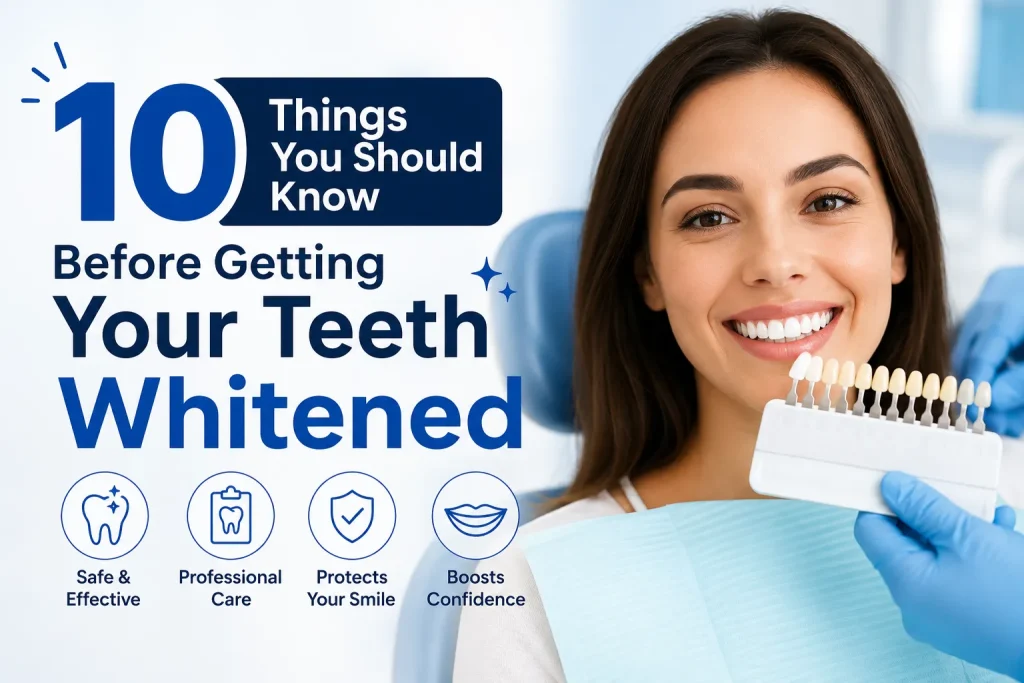
In this article, we’ll walk you through 10 essential things you should know before getting your teeth whitened, including how professional whitening works, who is a suitable candidate, common myths, potential side effects, aftercare tips, and how to maintain your results for longer. By the end, you’ll have the knowledge you need to decide whether professional teeth whitening is the right choice for your smile.
What Is Professional Teeth Whitening?
Professional teeth whitening is a cosmetic dental procedure performed by a qualified dentist to safely lighten the natural color of your teeth and remove stains or discoloration. Unlike over-the-counter whitening products, professional treatments use clinically approved whitening agents and customized techniques to deliver faster, more noticeable, and longer-lasting results.
The treatment is designed to brighten your smile while protecting your teeth and gums. Before the procedure, your dentist will assess your oral health to ensure whitening is suitable for you and recommend the most appropriate treatment option.
How Does Teeth Whitening Work?
Professional teeth whitening uses whitening agents such as hydrogen peroxide or carbamide peroxide. These ingredients penetrate the enamel and break down stain molecules into smaller, less visible particles through an oxidation process.

As the stains are broken apart, the natural brightness of your teeth becomes more visible without damaging healthy tooth enamel when the treatment is performed under professional supervision.
Depending on the severity of discoloration, many patients notice their teeth becoming several shades whiter after a single in-office session.
Types of Tooth Stains
Understanding the type of stain is important because it influences how effective whitening treatment will be.
Extrinsic Stains
Extrinsic stains occur on the outer surface of the enamel and are the most common type of discoloration. They are typically caused by:
- Coffee and tea
- Red wine
- Soft drinks
- Smoking or tobacco use
- Dark-colored foods
- Poor oral hygiene
These stains generally respond very well to professional teeth whitening.

Intrinsic Stains
Intrinsic stains develop beneath the enamel within the dentin. They may result from:
- Natural aging
- Certain medications, such as tetracycline
- Dental trauma
- Excess fluoride exposure (fluorosis)
- Previous dental treatments
These stains are often more difficult to treat with whitening alone and may require cosmetic solutions such as veneers or dental bonding.

Professional Teeth Whitening vs. Cosmetic Smile Enhancement
While professional teeth whitening is an excellent solution for removing stains from natural teeth, it is not the right treatment for every cosmetic concern.
| Professional Teeth Whitening | Cosmetic Smile Enhancement |
|---|---|
| Brightens natural teeth | Improves the overall appearance of the smile |
| Removes stains and discoloration | Corrects chips, cracks, gaps, uneven teeth, and discoloration |
| Non-invasive procedure | May include veneers, bonding, crowns, or orthodontic treatment |
| Ideal for healthy natural teeth | Suitable for more complex aesthetic concerns |
If your teeth have severe discoloration, damaged enamel, or visible restorations such as crowns or veneers, your dentist may recommend a more comprehensive cosmetic treatment instead of whitening alone.
Who Is a Good Candidate for Teeth Whitening?
Professional teeth whitening is most effective for individuals with healthy teeth and gums who want to improve the appearance of stained or discolored teeth. A dental examination is always recommended before treatment to determine whether whitening is the best option for your smile.
Suitable Candidates Include:
- Adults with healthy teeth and gums
- People with yellow or surface-stained teeth
- Coffee and tea drinkers
- Individuals who smoke or have recently quit smoking
- Brides, grooms, and professionals preparing for important events
- Anyone looking to enhance their smile without invasive dental procedures
Professional whitening is particularly effective for stains caused by food, beverages, tobacco, and the natural aging process.

Who May Need an Alternative Treatment?
Teeth whitening may not be the best choice for everyone. Your dentist may recommend postponing or avoiding whitening if you have:
- Untreated cavities
- Gum disease or gum infections
- Severe tooth sensitivity
- Worn or damaged enamel
- Large fillings, crowns, or veneers on visible front teeth
- Deep intrinsic stains that are unlikely to respond to whitening alone
In these cases, treating the underlying dental issue first—or considering alternative cosmetic procedures—can help achieve safer and more satisfying results. A personalized consultation with your dentist will ensure you receive the treatment that best matches your oral health and aesthetic goals.
10 Things You Should Know Before Getting Your Teeth Whitened
Professional teeth whitening is a safe and effective way to achieve a brighter smile, but understanding the treatment beforehand can help you set realistic expectations and maximize your results. Here are ten important things every patient should know before booking a whitening appointment.
1. Not Every Tooth Stain Can Be Whitened
One of the biggest misconceptions about teeth whitening is that it can remove all types of stains. In reality, the success of whitening depends on the cause and type of discoloration.
Professional whitening works best for:
- Yellow teeth caused by aging
- Coffee and tea stains
- Tobacco stains
- Food and beverage discoloration
- Surface (extrinsic) stains
However, whitening may be less effective for:
- Gray or bluish teeth
- Stains caused by certain medications (such as tetracycline)
- Fluorosis-related discoloration
- Teeth that have undergone root canal treatment
If whitening alone is unlikely to produce the desired result, your dentist may recommend cosmetic treatments such as veneers or dental bonding.
2. Professional Whitening Is Safer Than DIY Methods
Over-the-counter whitening strips, gels, toothpastes, and online whitening kits are widely available, but they are not always the safest or most effective option.
Professional teeth whitening offers several advantages:
- Higher-quality whitening agents
- Customized treatment based on your oral health
- Protection for your gums and soft tissues
- Faster, more predictable results
- Supervision by an experienced dentist
DIY products may cause uneven whitening, gum irritation, or increased tooth sensitivity if used incorrectly. Professional treatment minimizes these risks while delivering better results.
3. A Dental Check-Up Comes First
Before whitening your teeth, your dentist will perform a comprehensive oral examination to ensure your teeth and gums are healthy.
During the consultation, your dentist will check for:
- Tooth decay
- Gum disease
- Cracked teeth
- Worn enamel
- Existing dental restorations
- Tooth sensitivity
If any underlying dental issues are present, they should be treated before whitening begins. This helps protect your oral health and improves the effectiveness of the treatment.

4. Crowns, Veneers, and Fillings Won’t Whiten
Professional whitening only works on natural tooth enamel.
It does not change the color of:
- Dental crowns
- Porcelain veneers
- Composite fillings
- Bridges
- Dental bonding materials
If you have visible restorations on your front teeth, your dentist will discuss how whitening may affect the overall appearance of your smile and whether replacement of older restorations is recommended after treatment.
5. Mild Sensitivity Is Temporary
Some patients experience temporary tooth sensitivity after professional whitening. This is completely normal and usually lasts between 24 and 48 hours.
You may notice sensitivity when consuming:
- Hot drinks
- Cold beverages
- Ice cream
- Sweet foods
Your dentist may recommend:
- Toothpaste for sensitive teeth
- Fluoride treatments
- Desensitizing gel
- Avoiding extremely hot or cold foods for a short period
Most patients find that the sensitivity resolves quickly without any long-term effects.
6. Results Depend on Your Lifestyle
No two patients achieve identical whitening results. The final outcome depends on several personal factors, including:
- Your natural tooth color
- The severity of staining
- Age
- Smoking habits
- Consumption of tea, coffee, and other staining foods
- Overall oral hygiene
Patients who maintain healthy habits generally enjoy brighter smiles for a longer period.
7. Avoid Dark Foods and Drinks After Treatment
Immediately after whitening, your teeth are slightly more susceptible to absorbing stains. For the first 24 to 48 hours, it’s best to avoid foods and beverages that can discolor your teeth.
Avoid:
- Tea
- Coffee
- Red wine
- Cola and dark soft drinks
- Soy sauce
- Curry
- Chocolate
- Berries
- Tobacco products
Instead, choose lighter-colored foods such as rice, chicken, yogurt, pasta, bananas, cauliflower, and water to help preserve your results.
8. Whitening Isn’t Permanent
Professional teeth whitening provides long-lasting results, but it is not a permanent solution.
Depending on your lifestyle and oral care routine, results typically last between 6 months and 2 years.
To maintain your brighter smile:
- Brush twice daily
- Floss every day
- Visit your dentist for regular cleanings
- Reduce smoking
- Limit staining beverages
- Consider occasional touch-up whitening treatments
Consistent oral care plays a significant role in extending the longevity of your results.
9. Choosing the Right Dental Clinic Matters
The quality and safety of your whitening treatment depend largely on the experience of your dentist and the clinic you choose.
When selecting a dental clinic, consider:
- Qualified and experienced dentists
- Modern whitening technology
- Comprehensive pre-treatment consultation
- High standards of infection control
- Transparent pricing
- Positive patient reviews
- Personalized treatment planning
Choosing a reputable clinic ensures you receive safe care and achieve the best possible cosmetic outcome.
10. Good Oral Hygiene Helps Maintain Results
Professional whitening is only the first step toward a brighter smile. Maintaining excellent oral hygiene is essential for keeping your teeth white and healthy.
Simple habits that make a big difference include:
- Brushing twice a day with fluoride toothpaste
- Flossing daily
- Using an antibacterial mouthwash if recommended
- Drinking water after consuming staining foods or beverages
- Scheduling professional dental cleanings every six months
- Following your dentist’s aftercare instructions
By combining professional whitening with consistent oral care, you can enjoy a brighter smile for much longer and reduce the need for frequent touch-up treatments.

Professional Whitening vs At-Home Kits
When it comes to achieving a brighter smile, many people wonder whether they should choose professional teeth whitening or use an at-home whitening kit. While both options can improve the appearance of stained teeth, they differ significantly in terms of effectiveness, safety, convenience, and long-term results.
The table below compares the two approaches to help you make an informed decision.
| Feature | Professional Teeth Whitening | At-Home Whitening Kits |
|---|---|---|
| Performed By | Qualified dentist | Self-administered |
| Whitening Agent Strength | Professional-grade whitening gel | Lower-concentration whitening gel |
| Treatment Time | 45–90 minutes | Several days to several weeks |
| Results | Noticeable improvement in one visit | Gradual improvement over time |
| Safety | Dentist supervises and protects gums | Higher risk of misuse or gum irritation |
| Customization | Tailored to your teeth and oral health | One-size-fits-most products |
| Sensitivity Management | Dentist can adjust treatment and provide desensitizing products | Limited control over sensitivity |
| Suitable For | Moderate to severe staining | Mild surface stains |
| Long-Term Results | Longer-lasting with proper care | Often requires frequent repeat use |
| Overall Recommendation | Best for safe, fast, and predictable results | Suitable for maintenance or minor whitening |
While at-home products may be convenient for mild discoloration, professional whitening remains the most effective option for patients seeking faster, safer, and more consistent results.
How to Prepare Before Your Whitening Appointment
Proper preparation can improve the effectiveness of your whitening treatment and reduce the risk of temporary sensitivity. Before beginning the procedure, your dentist will ensure that your teeth and gums are healthy enough for whitening.
Schedule a Comprehensive Oral Examination
A professional dental examination is the first step before whitening.
During this visit, your dentist will:
- Check for cavities
- Examine your gums for signs of disease
- Assess tooth sensitivity
- Identify worn enamel or cracked teeth
- Review any existing dental restorations
Addressing these issues beforehand helps ensure safe and successful treatment.
Get Professional Scaling and Polishing
Removing plaque, tartar, and surface stains before whitening allows the whitening gel to work more effectively.
Professional scaling and polishing can:
- Improve whitening results
- Promote healthier gums
- Remove stubborn deposits
- Create a cleaner tooth surface for even whitening
Many dentists recommend completing a professional cleaning before whitening, especially if it has been several months since your last dental visit.
Treat Cavities and Other Dental Problems First
Whitening should never be performed on teeth with untreated dental problems.
Your dentist may recommend treating:
- Tooth decay
- Broken fillings
- Gum infections
- Cracked teeth
- Exposed tooth roots
Treating these conditions first reduces discomfort and helps prevent complications during whitening.
Discuss Tooth Sensitivity with Your Dentist
If you already have sensitive teeth, let your dentist know before treatment.
Your dentist may recommend:
- Desensitizing toothpaste
- Fluoride treatment
- Lower-concentration whitening gel
- Shorter whitening sessions
- Additional protective measures during treatment
A personalized treatment plan helps ensure a comfortable whitening experience.

What Happens During the Procedure?
Professional teeth whitening is a straightforward procedure that is typically completed in a single appointment.
1st Step: Initial Assessment
Your dentist examines your teeth, records the current tooth shade, and discusses your whitening goals.
2nd Step: Cleaning the Teeth
Your teeth are cleaned to remove any remaining plaque or debris before the whitening gel is applied.
3rd Step: Protecting the Gums
A protective barrier or gel is placed over the gums and surrounding soft tissues to prevent irritation from the whitening agent.
4th Step: Applying the Whitening Gel
A professional-strength whitening gel containing hydrogen peroxide or carbamide peroxide is carefully applied to the teeth.
Depending on the whitening system used, the gel may be activated with an LED light or another specialized light source to enhance the whitening process.
5th Step: Monitoring the Treatment
The whitening gel remains on the teeth for a specific period while your dentist monitors your comfort and the progress of the treatment.
Multiple applications may be performed during the same appointment if needed.
6th Step: Rinsing and Evaluating Results
After the treatment, the gel is removed, your teeth are rinsed, and your dentist compares the final shade with your original tooth color.
You will also receive aftercare instructions to help maintain your brighter smile.
Expected Treatment Time
Most professional teeth whitening appointments take 45 to 90 minutes, depending on:
- The whitening system used
- The severity of discoloration
- The desired level of whitening
- Whether additional applications are required
Many patients notice a visibly brighter smile immediately after the procedure.
Possible Side Effects
Professional teeth whitening is considered a safe cosmetic dental procedure when performed by a qualified dentist. However, like many dental treatments, mild temporary side effects may occur.
Tooth Sensitivity
The most common side effect is temporary tooth sensitivity.
You may experience sensitivity when consuming:
- Cold drinks
- Hot beverages
- Sweet foods
- Cold air
This usually lasts for 24 to 48 hours and gradually resolves on its own.
Gum Irritation
If whitening gel comes into contact with the gums, some patients may experience mild irritation or temporary whitening of the gum tissue.
Symptoms may include:
- Mild redness
- Slight tenderness
- Temporary burning sensation
Professional whitening minimizes this risk by protecting the gums before treatment begins.
How to Manage Discomfort
If you experience temporary sensitivity after whitening, the following tips may help:
- Use toothpaste formulated for sensitive teeth.
- Avoid extremely hot or cold foods and beverages for the first 24–48 hours.
- Drink water instead of acidic or sugary drinks.
- Follow your dentist’s aftercare instructions carefully.
- Take any dentist-recommended desensitizing products if needed.
Most patients find that any discomfort is mild and short-lived, allowing them to enjoy the cosmetic benefits of a brighter, more confident smile without long-term side effects.
Teeth Whitening Myths vs Facts
There are many misconceptions surrounding teeth whitening, and believing these myths can lead to unrealistic expectations or even unsafe practices. Understanding the facts will help you make informed decisions and achieve the best possible results.
| Myth | Fact |
|---|---|
| Myth 1: Teeth whitening damages tooth enamel. | Fact: Professional teeth whitening is safe and does not damage healthy enamel when performed by a qualified dentist using approved whitening agents. |
| Myth 2: Whitening toothpaste works the same as professional whitening. | Fact: Whitening toothpaste mainly removes surface stains and cannot significantly change the natural shade of your teeth like professional treatments can. |
| Myth 3: One whitening treatment lasts forever. | Fact: Teeth whitening is not permanent. Results typically last 6 months to 2 years, depending on your lifestyle and oral hygiene habits. |
| Myth 4: Everyone gets the same whitening results. | Fact: Results vary based on your natural tooth color, the type of stains, age, and daily habits such as smoking or drinking coffee and tea. |
| Myth 5: DIY remedies like lemon juice and baking soda are safe. | Fact: Acidic or abrasive home remedies can wear away enamel, increase tooth sensitivity, and damage your teeth over time. |
| Myth 6: Teeth whitening works on crowns, veneers, and fillings. | Fact: Whitening only affects natural tooth enamel. Dental restorations such as crowns, veneers, bridges, and fillings will not change color. |
| Myth 7: Teeth whitening is painful. | Fact: Most patients experience little or no discomfort. Some may have temporary sensitivity that usually disappears within 24–48 hours. |
| Myth 8: The stronger the whitening product, the better the results. | Fact: Higher concentrations should only be used under professional supervision. Improper use can increase the risk of gum irritation and sensitivity without improving results. |
How to Keep Your Teeth White Longer
Professional teeth whitening can provide long-lasting results, but maintaining your brighter smile depends on your daily habits and oral care routine. By following a few simple practices, you can enjoy your whitening results for months—or even years.
Follow a Tooth-Friendly Diet
Certain foods and drinks can stain your teeth over time. To preserve your whitening results, try to limit:
- Coffee
- Tea
- Red wine
- Cola and dark soft drinks
- Soy sauce
- Curry
- Dark berries
- Tobacco products
Instead, choose foods that are less likely to stain, such as:
- Water
- Milk
- Chicken
- Rice
- Yogurt
- Cauliflower
- Bananas
- Apples
Using a straw for cold beverages and rinsing your mouth with water after consuming staining foods can also help reduce discoloration.
Maintain Excellent Oral Hygiene
Good oral hygiene is one of the most effective ways to keep your smile bright.
Make these habits part of your daily routine:
- Brush your teeth twice a day with fluoride toothpaste.
- Floss daily to remove plaque between teeth.
- Clean your tongue to reduce bacteria.
- Use an alcohol-free mouthwash if recommended by your dentist.
- Replace your toothbrush every three to four months.
Consistent oral hygiene not only helps maintain whitening results but also supports overall dental health.
Visit Your Dentist Regularly
Routine dental check-ups and professional cleanings help remove plaque and surface stains before they become noticeable.
Most dentists recommend:
- Dental check-ups every six months
- Professional scaling and polishing as advised
- Early treatment of dental problems before they worsen
Regular visits also allow your dentist to monitor your whitening results and recommend preventive care.
Consider Touch-Up Treatments
Even with excellent oral care, natural staining may gradually return over time.
Depending on your lifestyle, your dentist may recommend touch-up whitening:
- Every 6–12 months for frequent coffee or tea drinkers and smokers
- Every 12–24 months for most patients with good oral hygiene
Professional touch-up treatments help maintain a consistently bright smile without the need for a full whitening procedure.
Frequently Asked Questions
Most patients experience little to no discomfort. Some people may notice mild tooth sensitivity for 24–48 hours after treatment, but this is temporary and usually resolves on its own.
An in-office whitening session typically takes 45 to 90 minutes, depending on the whitening system used and the level of discoloration.
Results generally last between 6 months and 2 years, depending on your diet, oral hygiene, smoking habits, and regular dental care.
In many cases, yes. Professional whitening is highly effective for yellow teeth caused by aging, food, beverages, or smoking. However, deeper intrinsic stains may require alternative cosmetic treatments.
No. Teeth whitening only affects natural tooth enamel. Existing dental restorations such as crowns, veneers, bridges, and composite fillings will not change color.
Yes. Smokers can benefit from professional whitening, but continued smoking may cause stains to return more quickly. Quitting or reducing tobacco use helps maintain results for longer.
Yes, but for the first 24–48 hours, it’s best to avoid dark-colored foods and beverages such as coffee, tea, red wine, berries, curry, and cola. Choosing lighter-colored foods during this period helps protect your results.
Many patients achieve excellent results after a single professional treatment. However, individuals with severe discoloration may benefit from additional sessions or a customized whitening plan.
Yes. Professional whitening provides stronger whitening agents, customized treatment, gum protection, and faster, more predictable results compared to most over-the-counter products.
Final Thoughts
Professional teeth whitening is one of the safest and most effective ways to enhance your smile when performed by an experienced dental professional. By understanding the facts, following proper aftercare, and maintaining good oral hygiene, you can enjoy a brighter, healthier-looking smile for years to come.
If you’re considering professional teeth whitening, schedule a consultation with your dentist to determine the best treatment plan for your smile and oral health goals.