Skip to content
A healthy smile plays an important role in confidence, communication, and overall quality of life. However, losing one or more teeth can affect not only your appearance but also your ability to chew properly and maintain good oral health. Missing teeth may gradually create additional dental problems, including shifting of nearby teeth, difficulty in biting food, and changes in jawbone structure.
Modern dentistry has introduced advanced solutions to overcome these challenges, and Dental Implants are considered one of the most reliable and natural-looking options for replacing missing teeth. Unlike traditional dentures or bridges, implants replace the tooth root and provide a stable foundation for a permanent artificial tooth.
With proper planning, professional care, and good oral hygiene, dental implants can restore your smile, improve chewing ability, and support long-term oral health. This comprehensive guide explains everything you need to know about implants, including their procedure, benefits, types, cost factors, recovery process, and frequently asked questions.
What Are Dental Implants?
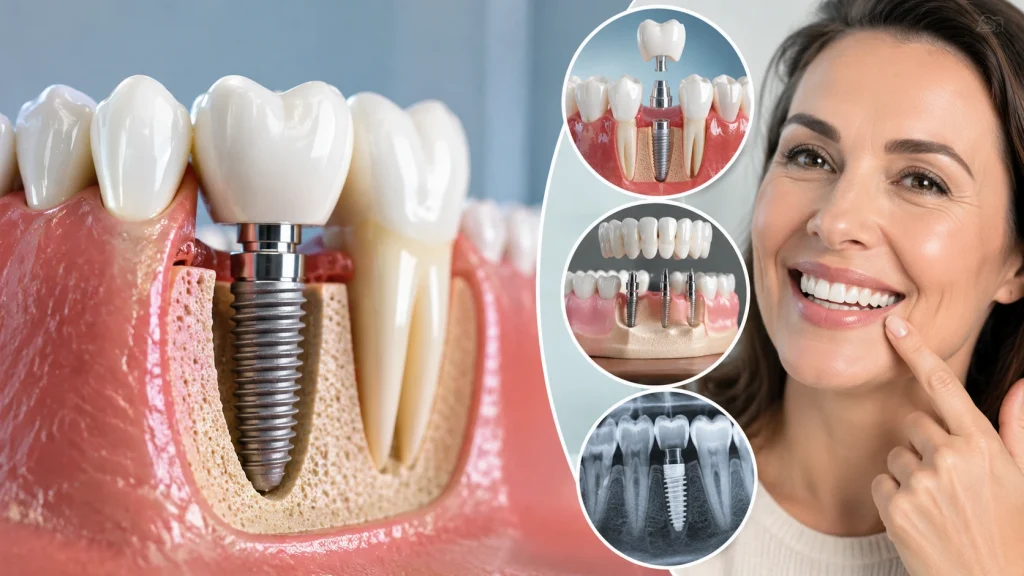
Dental implants are artificial tooth roots that are surgically placed into the jawbone to replace the root portion of a missing tooth. They are commonly made from titanium, a biocompatible material that can naturally integrate with human bone.
Once the implant successfully bonds with the jawbone through a process called osseointegration, a customized dental crown is attached on top to restore the appearance and function of a natural tooth.
Unlike removable dentures, implants are fixed securely in the mouth. They provide stability while eating, speaking, and performing daily activities. Because they replace both the root and visible portion of the tooth, they closely mimic the function of natural teeth.
A complete dental implant restoration generally consists of three main components:
1. Implant Fixture
The implant fixture is the foundation of the treatment. It is a small screw-like structure placed inside the jawbone. Its main purpose is to act as an artificial tooth root and provide strong support for the replacement tooth.
2. Abutment
The abutment is a connector placed between the implant fixture and dental crown. It helps securely attach the artificial tooth while maintaining proper alignment.
3. Dental Crown
The dental crown is the visible part of the implant. It is designed according to the patient’s natural tooth color, shape, and bite structure to create a realistic and comfortable smile.
Why Do People Need Dental Implants?
Tooth loss can happen for various reasons, including tooth decay, gum disease, injuries, infections, or aging-related dental problems. When a tooth is missing, the problem is not limited to appearance. A missing tooth can affect chewing efficiency and may cause neighboring teeth to move into the empty space.
Over time, the lack of tooth root stimulation can also contribute to jawbone deterioration. This is why replacing missing teeth is important for maintaining oral function and facial structure.
Dental Implants provide a long-term solution because they replace the missing tooth root and help maintain the stability of the surrounding bone.
Common reasons people choose dental implants include:
- Replacing one or more missing teeth
- Improving chewing ability
- Restoring a natural-looking smile
- Preventing unwanted tooth movement
- Supporting better oral health
Types of Dental Implants
Dental implant treatment is not the same for every patient. The type of implant depends on the number of missing teeth, jawbone condition, and individual dental requirements.
Single Dental Implants
A single dental implant is recommended when only one tooth is missing. It replaces the entire tooth structure without affecting the surrounding healthy teeth.
This option provides a stable and natural-looking replacement that functions similarly to a natural tooth. Unlike a traditional dental bridge, a single implant does not require support from neighboring teeth.
Multiple Dental Implants
When several teeth are missing, multiple dental implants can be used to restore function and appearance. Depending on the situation, dentists may place multiple implants to support individual crowns or an implant-supported bridge.
This approach provides better stability compared to removable options and helps patients regain confidence while eating and speaking.
Full Mouth Dental Implants
Full mouth dental implants are designed for patients who have lost most or all of their teeth. This treatment uses multiple implants to support a complete set of fixed replacement teeth.
Compared to conventional dentures, full mouth implants offer improved stability, comfort, and a more natural feel.
Dental Implants Procedure: Step-by-Step Guide
The dental implant process involves multiple stages to ensure successful results. The timeline may vary depending on bone condition, healing ability, and the complexity of the treatment.
Initial Consultation and Dental Evaluation
The first stage involves a detailed examination by a qualified dental professional. The dentist evaluates your oral health, gum condition, jawbone strength, and overall suitability for implant treatment.
Advanced diagnostic tools such as dental X-rays or 3D imaging may be used to determine the exact placement and position and create a personalized treatment plan.
A proper evaluation helps identify whether additional procedures, such as bone grafting, are required before implant placement.
Implant Placement Surgery
During the implant placement procedure, the dentist carefully inserts the implant fixture into the jawbone. Local anesthesia is generally used to ensure patient comfort during the procedure.
After placement, the implant begins bonding with the surrounding bone. This natural healing process creates a strong foundation for the final restoration.
Healing and Osseointegration Period
After implant placement, the jawbone needs time to integrate with the implant. This process is known as osseointegration and is essential for creating long-term stability.
The healing period varies from patient to patient depending on factors such as bone quality, implant location, and overall health.
During this stage, temporary teeth may be provided to maintain appearance and basic function.
Abutment and Crown Placement
Once the implant has successfully integrated with the jawbone, the dentist attaches the abutment and places the customized dental crown.
The final crown is carefully designed to match your natural teeth, ensuring proper bite alignment and an attractive smile.
Benefits of Dental Implants
Dental implants have become a preferred choice for tooth replacement because they offer several functional and aesthetic advantages.
Natural Appearance and Comfort
One of the biggest benefits of dental implants is their natural appearance. The replacement crown is customized to match surrounding teeth, making it difficult to distinguish from natural teeth.
Because implants are fixed in the jawbone, they also feel more comfortable compared to removable dentures.
Improved Chewing and Speaking Ability
Missing teeth can make chewing certain foods difficult and may affect speech. Dental implants provide strong support, allowing patients to eat and speak more comfortably.
Long-Term Durability
With proper oral care and regular dental visits, dental implants can provide long-lasting results. Their durability makes them a valuable investment for people seeking a permanent tooth replacement option.
Helps Preserve Jawbone
A missing tooth root can lead to gradual bone loss because the jaw no longer receives stimulation from natural chewing pressure. Dental implants help maintain jawbone structure by replacing the tooth root.
Protects Healthy Teeth
Traditional bridges often require modification of neighboring teeth for support. Dental implants eliminate this requirement, helping preserve healthy, natural teeth.
Dental Implants vs Dentures: Which Is Better?
Both dental implants and dentures are effective solutions for replacing missing teeth, but they work differently.
| Feature | Dental Implants | Dentures |
| Stability | Fixed and secure | Removable |
| Appearance | More natural-looking | May appear less natural |
| Comfort | Feels similar to natural teeth | May require adjustment |
| Bone Preservation | Helps maintain jawbone | Does not prevent bone loss |
| Durability | Long-term solution | Requires replacement over time |
Dental implants generally provide better stability and a more natural experience because they are anchored directly into the jawbone. However, the ideal treatment depends on factors such as oral health, bone condition, personal needs, and budget.
Who Is a Suitable Candidate for Dental Implants?
Most adults with missing teeth may be considered candidates for dental implants. However, a complete dental evaluation is necessary before starting treatment.
A good candidate usually has:
- Healthy gums
- Sufficient jawbone support
- Good oral hygiene habits
- Commitment to regular dental care
Patients with reduced bone density may require additional procedures before implant placement. A dental specialist can recommend the most suitable approach after evaluating your condition.
Dental Implants Cost: What Factors Affect the Price?
The cost of dental implants varies from person to person because every treatment plan is different. Several factors influence the overall expense, including:
- Number of implants required
- Type and quality of implant materials
- Dentist’s experience and expertise
- Dental clinic location
- Type of dental crown selected
- Additional procedures, such as bone grafting
Although dental implants may have a higher initial investment compared to dentures, many patients consider them worthwhile because of their durability, comfort, and long-term benefits.
A consultation with a dental professional is the best way to understand the exact cost based on your specific dental needs.
Recovery and Aftercare Following Dental Implant Treatment
Recovery after dental implant surgery is usually manageable with proper care. Some patients may experience mild discomfort, swelling, or sensitivity during the initial healing period.
Following your dentist’s instructions can support faster recovery and improve treatment success.
Important aftercare practices include:
- Maintain proper brushing and flossing habits
- Follow prescribed medications if recommended
- Avoid putting excessive pressure on the implant area during healing
- Attend scheduled dental follow-ups
- Maintain regular oral hygiene
Long-term care is essential because, although implants cannot develop cavities, the surrounding gums and tissues still require protection.
How to Maintain Dental Implants for Long-Term Results
Proper maintenance plays an important role in the success of dental implants. Patients should treat implants with the same care as natural teeth.
Regular dental checkups allow professionals to monitor implant stability and identify any potential issues early.
Recommended habits include:
- Brushing twice daily
- Cleaning between teeth and implants
- Avoiding harmful oral habits
- Scheduling routine dental examinations
With consistent care, dental implants can remain functional and aesthetically pleasing for many years.
Are Dental Implants Safe?
Dental implants are a well-established and widely used dental treatment with a strong record of success when performed by experienced professionals.
Modern technology, improved implant materials, and advanced treatment planning have made implant procedures safer and more predictable.
However, successful results depend on proper patient evaluation, professional expertise, and following recommended aftercare instructions.
Conclusion
Dental implants have become one of the most trusted solutions for replacing missing teeth because they provide a natural appearance, improved function, and long-term stability. By replacing both the tooth root and crown, they offer benefits that traditional tooth replacement methods cannot always provide.
Choosing Dental Implants requires proper evaluation, professional guidance, and commitment to maintaining good oral hygiene. If you are considering replacing missing teeth, consulting an experienced dental professional can help you determine the most suitable treatment option for achieving a healthy and confident smile.
Frequently Asked Questions About Dental Implants
1. How long does a dental implant last?
Dental implants are designed as a long-term tooth replacement solution. With proper oral hygiene, regular dental visits, and healthy habits, they can last many years.
2. How painful is the dental implant procedure?
Most patients experience minimal discomfort during implant placement because anesthesia is used. Some mild soreness or swelling may occur during the recovery period.
3. How long does the complete dental implant treatment take?
The timeline varies depending on healing speed, bone condition, and treatment complexity. In many cases, the process takes several months because the implant needs time to integrate with the jawbone.
4. Can dental implants look like natural teeth?
Yes. Dental crowns used with implants are customized based on tooth color, shape, and size, creating a natural-looking restoration that blends with existing teeth.
5. Are dental implants better than traditional dentures?
Dental implants often provide better stability, comfort, and chewing ability compared to traditional dentures. However, the best option depends on each patient’s oral health condition and treatment goals.