Skip to content
7 Signs You Need a Root Canal Before It’s Too Late
Complete Patient Guide to Recognizing Tooth Infection Early
Every year, thousands of patients lose teeth because they ignore the early warning signs of infection. What often begins as mild tooth sensitivity can gradually develop into severe pain, deep infection, and even tooth loss.
One of the most common questions dentists hear is:
“How do I know if I need a root canal?”
The answer is not always obvious. Some people experience severe pain, while others have very few symptoms until the infection becomes serious.
Understanding the warning signs early can help save your natural tooth, reduce treatment costs, and prevent complications.
In this guide, you’ll learn:
- The 7 warning signs you need a root canal
- How tooth infections develop
- Root canal vs tooth extraction
- What happens if you delay treatment
- Real patient examples
- Root canal treatment options in Uttara
- Cost considerations and treatment planning
What Is a Root Canal Treatment?
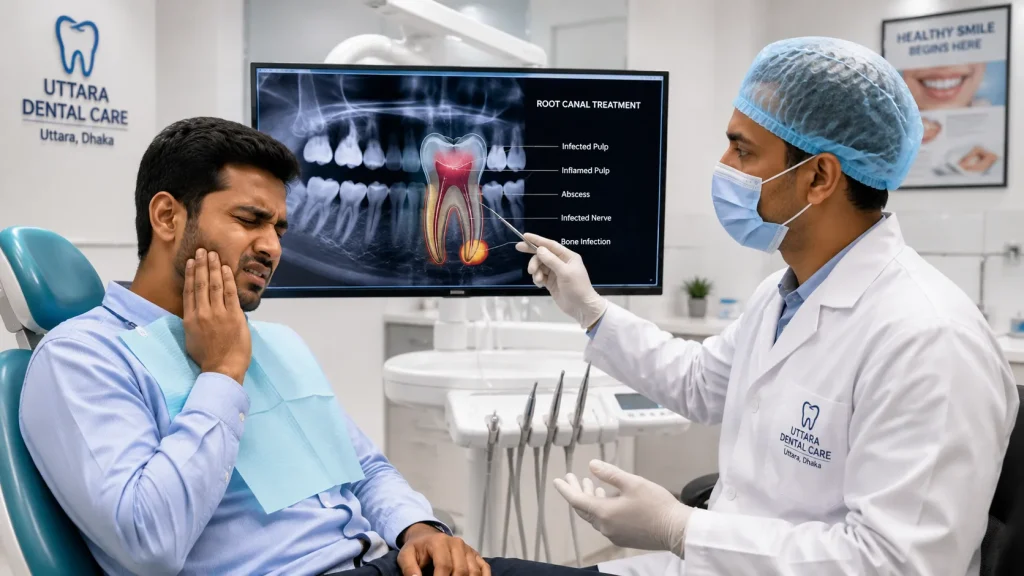
Root canal treatment is a procedure used to remove infection from inside the tooth while preserving the natural tooth structure.
Inside every tooth is soft tissue called the pulp. This pulp contains:
- Blood vessels
- Connective tissue
- Nerves

উত্তরায় ভালো দাঁতের ডাক্তার কিভাবে নির্বাচন করবেন?
When bacteria reach the pulp through decay, cracks, or trauma, infection develops.
Without treatment, the infection can spread to surrounding tissues and bone.
The goal of root canal treatment is to:
- Remove infection
- Eliminate pain
- Save the natural tooth
- Prevent extraction
How Tooth Infection Develops
Most tooth infections follow a similar pattern:
1st Stage: Small Cavity
Minor tooth decay begins.
Symptoms:
- Usually no pain
2nd Stage: Deep Decay
Decay approaches the nerve.
Symptoms:
- Sensitivity to hot and cold
3rd Stage: Pulp Infection
Bacteria enter the tooth nerve.
Symptoms:
- Severe pain
- Throbbing discomfort
4th Stage: Abscess Formation
Infection spreads beyond the root.
Symptoms:
- Swelling
- Pus
- Fever
5th Stage: Tooth Loss
The tooth becomes difficult or impossible to save.
This is why early diagnosis is so important.
1st : Severe Tooth Pain That Won’t Go Away
Persistent pain is one of the strongest indicators that a root canal may be needed.
Pain may feel:
- Sharp
- Throbbing
- Pulsating
- Constant
Many patients notice the pain becomes worse:
- At night
- While lying down
- During meals
If tooth pain lasts for several days, you should schedule a dental examination immediately.
2nd : Long-Lasting Sensitivity to Hot or Cold
Temporary sensitivity is common.
However, sensitivity that lingers for several minutes may indicate nerve damage.
Examples:
- Drinking coffee causes pain
- Cold water triggers discomfort
- Sensitivity continues after the stimulus is removed
This often means the pulp inside the tooth is inflamed.
3rd : Pain While Chewing
Healthy teeth should not hurt during normal chewing.
Pain when biting may indicate:
- Infected tooth pulp
- Cracked tooth
- Root infection
- Inflammation around the tooth root
Many patients initially ignore this symptom until the pain becomes severe.
4th : Swollen Gums Near a Tooth
Localized gum swelling is often associated with infection.
Signs include:
- Puffy gums
- Tenderness
- Redness
- Small bumps near the tooth
Swelling may appear and disappear repeatedly.
This does not mean the infection is gone.
5th : Pimple or Pus on the Gums
One of the clearest signs of infection is a dental abscess.
Symptoms include:
- White or yellow pus
- Bad taste in the mouth
- Persistent drainage
- Swollen tissues
This is a dental emergency.
The infection should be treated immediately.
6th : Tooth Discoloration
A healthy tooth should maintain its natural color.
When the tooth nerve dies, the tooth may become:
- Gray
- Dark yellow
- Brown
- Blackish
Internal discoloration often signals nerve damage.
Root canal treatment may be required to save the tooth.
7th : Facial Swelling or Fever
This is one of the most serious warning signs.
If infection spreads beyond the tooth, patients may experience:
- Facial swelling
- Jaw swelling
- Fever
- Difficulty opening the mouth
These symptoms require urgent dental treatment.
Root Canal vs Tooth Extraction: Which Is Better?
Many patients wonder:

Should I save the tooth or remove it?
Root Canal Advantages
Saves natural tooth
Maintains chewing ability
Preserves jawbone
Prevents shifting teeth
Better long-term oral health
Tooth Extraction Advantages
Lower initial cost
Fast procedure
However, extraction often creates new problems.
Missing teeth may require:
- Dental implants
- Bridges
- Dentures
These treatments can become more expensive than root canal therapy.
In Most Cases
Dentists prefer saving the natural tooth whenever possible.
What Happens If You Delay Treatment?
Many patients wait weeks or months before seeking care.
This can lead to:
Increased Pain
The infection becomes more aggressive.
Bone Loss
Infection may damage the supporting bone.
Larger Abscess
Pus accumulation increases.
More Expensive Treatment
Advanced infections often require additional procedures.
Tooth Loss
The tooth may become impossible to save.
Real Patient Scenario #1
A patient experienced mild sensitivity for several months.
They delayed treatment because the discomfort seemed manageable.
Six months later:
- Severe pain developed
- Infection spread
- Large abscess formed
Root canal treatment became more complex and costly.
Real Patient Scenario #2
Another patient visited the dentist as soon as chewing discomfort began.
An X-ray revealed early pulp infection.
The root canal was completed before severe damage occurred.
The tooth was saved successfully.
Common Causes of Root Canal Problems
Deep Cavities
Untreated decay remains the most common cause.
Cracked Teeth
Cracks allow bacteria to reach the pulp.
Dental Trauma
Sports injuries and accidents can damage nerves.
Repeated Dental Procedures
Multiple restorations can sometimes irritate the pulp.
Can Root Canal Treatment Be Painless?
One of the biggest myths is that root canals are painful.
Modern dentistry has changed significantly.
Today’s treatment often includes:
- Digital imaging
- Rotary instruments
- Advanced anesthesia
- Improved techniques
Many patients compare root canal treatment to receiving a standard filling.
How Long Does Root Canal Treatment Take?
Most treatments can be completed within:
- One visit
- Two visits for complex infections
Treatment time depends on:
- Tooth type
- Number of canals
- Infection severity
Root Canal Cost Awareness
Many patients search for treatment costs before booking an appointment.
Cost may vary depending on:
- Front tooth vs molar
- Infection severity
- Need for crown placement
- Technology used
Remember:
Saving a tooth is often more economical than replacing a missing tooth later.
Contact Dental Clinic in Uttara Dhaka
When Should You Visit an Emergency Dentist?
You should seek urgent care if you experience:
- Severe tooth pain
- Facial swelling
- Pus discharge
- Fever
- Difficulty chewing
These symptoms may indicate a progressing infection.
Root Canal Treatment in Uttara Dhaka
Patients from:
- Uttara Sector 1
- Uttara Sector 3
- Uttara Sector 4
- Uttara Sector 7
- Uttara Sector 10
- Uttara Sector 11
- Uttara Sector 12
- Uttara Sector 13
- Uttara Sector 14
- House Building
- Azampur
- Rajlaxmi
often seek treatment for tooth infections, severe pain, and emergency dental concerns.
Early diagnosis can dramatically improve treatment success.
How to Reduce Your Risk of Needing a Root Canal
Good oral hygiene remains the best prevention strategy.
Brush Twice Daily
Use fluoride toothpaste.
Floss Regularly
Remove plaque between teeth.
Visit Your Dentist Every 6 Months
Routine examinations detect problems early.
Treat Cavities Quickly
Small cavities are easier and less expensive to treat.
Final Thoughts
Ignoring the warning signs of tooth infection can turn a treatable problem into a dental emergency.
If you experience:
- Severe tooth pain
- Lingering sensitivity
- Swollen gums
- Pus formation
- Tooth discoloration
- Facial swelling
you should schedule a dental examination as soon as possible.
Early root canal treatment can often save your natural tooth, prevent infection spread, and help you avoid more complex and expensive procedures later.
Frequently Asked Questions
Can a root canal save an infected tooth?
Yes. In many cases, root canal treatment removes infection and preserves the natural tooth.
Is root canal treatment better than extraction?
For most patients, saving the natural tooth provides better long-term results.
How do I know if my tooth infection is serious?
Signs include swelling, pus, fever, severe pain, and chewing discomfort.
Can I wait a few months before treatment?
Delaying treatment increases the risk of complications and tooth loss.